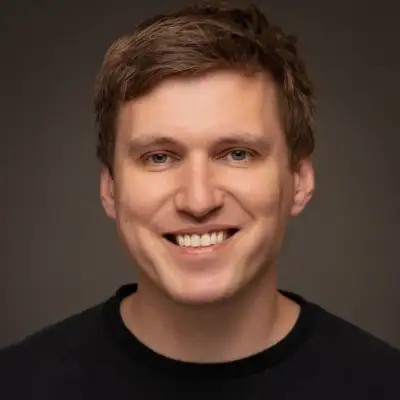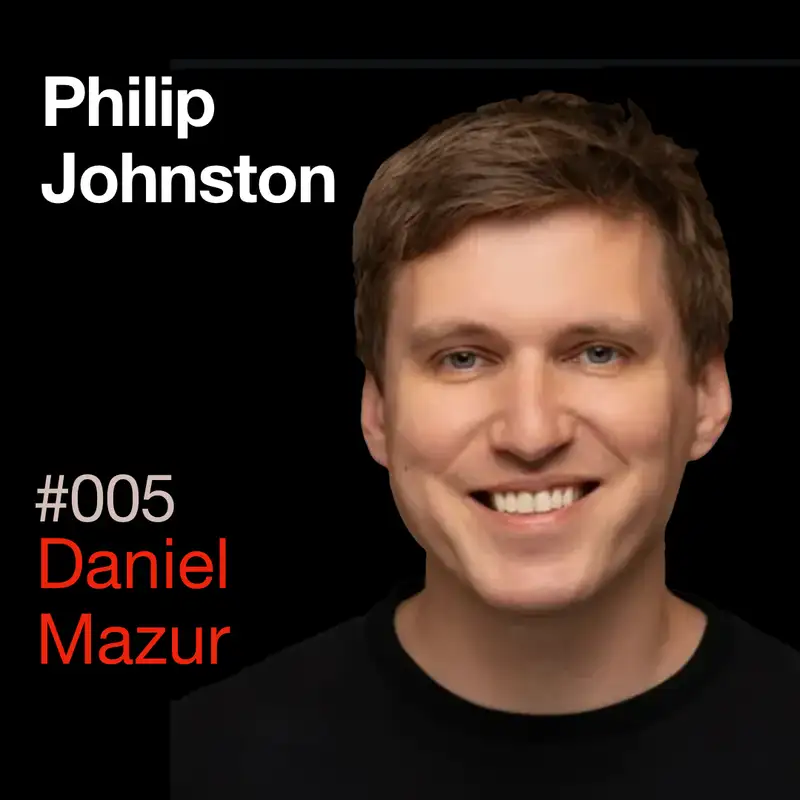
Philip Johnston: The Founder Aspiring to Capture all of the Sun’s Energy for Compute and Beyond
Five,
four,
three,
two,
one...
Star Cloud One,
upgrading confirmed.
Philip is an ambitious founder working on
putting data centers in space over at StarCloud,
and we first met in the forest at a Y Combinator founder retreat.
And since then,
the StarCloud team has launched their first satellite in space,
StarCloud One,
which I had the pleasure of seeing with my
own eyes a few weeks back at Cape Canaveral.
And boy,
what an experience that was!
I can still hear the roar of the rocket,
feel the vibrations when I close my eyes.
Philip,
it is a pleasure to have you on.
How's StarCloud One doing now?
Thanks so much for having me on.
That was a very poetic rendition of how that experience,
so I appreciate that.
StarCloud One is doing well.
Yeah,
we will make some announcements over the coming weeks.
But yeah,
StarCloud One is doing great.
Has it finished the commissioning process or still ongoing?
Still semi-ongoing.
Yeah,
still semi-ongoing.
Nothing that makes you nervous?
Nothing so far.
Okay.
That's good to hear.
And StarCloud Two is right around the corner,
is that right?
Yes,
October next year for StarCloud Two.
So exciting.
Any chance it might be earlier?
I know these kind of launch windows,
they fluctuate,
right?
It cannot be earlier.
It could be later.
Could be later.
I mean,
if it's later,
it won't be our fault.
But yeah,
sometimes I get pumped.
All right.
Well,
looking forward to joining for that one as well.
So what made you decide to start StarCloud?
What inspired you to do that?
I know you were doing something very different before.
Where did the impetus for StarCloud come from?
Yeah,
I mean,
I've been interested in space for as long as I can remember as a kid as well.
And then I ended up working with McKinsey in the Middle East,
working with the space agencies of different governments.
And that's how I started to realize that the
launch cost was coming down very rapidly.
And so in early 2023,
I kind of went down to Starbase,
Texas,
where they're building a Starship rocket.
Kind of a random trip,
like just thought it would be a fun weekend.
And kind of made me realize the launch cost with Starship
could come down by 10 or 100x over the next few years.
And that is a massive,
massive production.
And what that does is enable lots of different
use cases that were not possible before.
One of them that we first started looking at was space-based solar,
which is where you have these huge solar
panels in space and you beam the power down.
But the problem with that is you lose most of the power transmitting it down.
But with low launch costs,
you now have the ability to do things like moving data
centers to space where you can consume that energy in space.
And so we realized that we could potentially have 10x lower
energy costs than on Earth by running data centers in space,
including the launch cost than by running them on Earth.
So it sounds like you may have already had
the team before you'd selected the idea.
Is that right?
Yeah,
we had the team when the initial days of the
team was working on this space-based solar idea.
And then we switched quite quickly into working on moving
data centers to space to consume the energy next to
the solar panels rather than beaming the power down.
Interesting.
Were there any other ways that you guys
considered moving power from space to Earth?
I know it's difficult to recover things from space,
but batteries or any other method that you guys looked at aside from data?
We looked at everything that's currently feasible.
Things like charging batteries and re-entering them.
But all of that stuff requires a much lower
re-entry cost than we currently have.
And so,
yeah,
it just didn't really make sense.
Do you think there's anything like that coming down
the pipe in terms of any other competitors in space?
Not really,
no.
And the reason is,
you have to ask yourself,
why would you do that?
So to know,
why would you want new energy projects on Earth?
And to answer that question,
you just have to look at what new energy projects on Earth are being built for.
And almost all of them are being built to power data centers right now.
Almost all new energy projects on Earth are being built to power data centers.
And so if that's the case,
even if you can charge a battery,
you're still going to lose half of the energy in
charging and dissipating the power from the battery.
So why not?
If you're going to have to send those batteries up and down,
why not send the data center up and then just consume 100% of the power?
So it doesn't make sense at the moment.
Yeah,
fair enough.
Fair enough.
It's an idea that's been toyed with for a while.
I'm curious,
in preparing for this interview,
I watched a lot of the different interviews that you've done in the past.
And it seems that PR is a big role,
a big part of your founder responsibilities.
What else do you have that's really important in terms of being the CEO?
How technical is your job in making the startup run?
And how much of it is really just all the other peripheral things around that?
Yeah.
So being vocal on social media is certainly
one thing that I have decided to prioritize.
One of the reasons being that,
until quite recently,
people thought we were completely insane.
And so it was really like an exercise in changing public opinion.
And I don't want to take entire credit for it,
but we certainly play a big role,
I think,
in changing the public opinion.
And that was in part due to being very vocal in social media.
And then everything else is just like normal CEO stuff,
like hiring and strategy,
making the company run from a back office admin perspective.
And then all of the engineering work is done by my two co-founders,
Ezra and Addy.
So yeah,
I'm like commercial customers and fundraising,
things like that.
And PR.
Also things like legal,
HR,
finance.
And then my co-founders are solely,
mainly on the engineering side of things.
Yeah.
As founders,
we tend to be the catch-all folks.
I mean,
I know your two co-founders are super technically capable,
and I loved hearing them talk over at Cape Canaveral,
but how technical do you feel...
Oh yeah,
there they are right behind you.
Oh wait,
is that them?
No,
that's not them.
Okay,
okay.
I actually have no idea who that is.
Well,
how technical do you have to be as the CEO?
How deep in the product details do you have to be?
I mean,
you have to be pretty deep in the product detail.
You have to be pretty...
You have to understand the technicalities of it.
So my undergrad and master's is applied math and theoretical physics.
Spent the first five years of my career on the engineering side.
So that definitely helps in understanding if
things are feasible from a physics perspective.
It's true that I don't have a decade of satellite design experience,
which is also extremely necessary for designing satellites.
And that's where Ezra and Addy come in.
So what do you think are the learnings and
advantages of being a second-time founder?
This isn't your first rodeo.
What's your specific edge?
Yeah.
I think you make a lot of mistakes in your first time.
Do you know what,
actually?
I've been thinking about this recently.
I'm not even sure that it's mistakes.
I think it's just hesitancy when you're a first-time founder.
Because different strategies can work different ways.
For example,
one thing that I think was a huge mistake in my
first company was massively overhiring initially.
There are companies which are successful doing that as well.
So it's not like all that always fails.
I think what it does is it makes you very
opinionated about what you do and don't want.
And in this company,
I want to keep an extremely lean,
extremely technical core team with zero non-engineers for as long as possible.
Now,
maybe that's a good strategy.
Maybe it's not.
But what is important is that I'm opinionated about it,
and I move quickly,
and I'm decisive.
And that definitely helps a lot.
You had something like 100 folks at the previous
company and something like 10 at this one?
Is that right?
Yeah.
150 at the peak and then 12 at this one.
Okay.
Well,
there you go.
So being decisive,
knowing what you do and don't want.
Anything else that really comes to mind in
terms of a sharp contrast between the two?
I think you definitely get better at things like fundraising over time.
Things like don't raise out of a process and don't...
Sort of fairly common sense things that you can't internalize
until you've been through a few fundraisers definitely help.
What else?
Managing people I think is better the second time.
But again,
managing people thing is,
I think,
more about being decisive and knowing what you do and don't want.
I know you mentioned Hard Startups,
the essay by Sam Altman,
or the blog post rather.
It's rather short.
Is that a key inspiration for you to take such a big swing,
a big bet?
It was definitely one of them.
Another one was the release of ChatWPT.
I read this interesting quote the other day,
and I think I reposted it.
It was something along the lines of,
"The biggest risk a startup can take now is not tackling
an engineering problem that's too hard for them.
It's tackling an engineering problem that's too easy.
And the reason is if you do that,
you're going to get totally run over by AI".
That became very obvious to me in early 2023.
If you are doing a B2B SaaS thing,
it became obvious to me that that is a collision course with OpenAI.
So what company would you be building now if it wasn't
StarCloud to fall within a non-AI collision course?
Yeah,
I think like,
physical,
deep tech,
robotics,
space,
these are good areas because they're much harder to automate.
Yeah.
And who would you say your main competitors are at StarCloud today?
Is there anybody that keeps you up at night?
There's not many people on the startup side.
There's a few on the startup side,
but I wouldn't say we're...
Yeah,
we're working on slightly different things and I think we're moving very fast.
The other ones are...
Can you hear this noise in the background or not?
Yeah,
yeah.
I'll make a cut here.
Okay,
okay.
It's fine.
So the other ones,
I mean,
the hyperscalers that have space arms are XAI with SpaceX and AWS with Leo.
And so I think they seem like they're moving in this direction now.
Yeah,
I can't imagine the Blue Origin AWS aren't doing
something to get in this space in a big way.
Well,
they vocally have said they are.
Yeah,
yeah,
yeah.
So how do you view yourself in comparison to somebody like them?
Yeah,
I think we have an extremely capable team.
We're moving extremely fast.
We'll just put our heads down and execute on what we're doing as fast as we can.
Yeah,
there's going to be things for them as well.
It's not like I don't think there'll be space for them too.
Well,
I guess you don't seem as crazy when you're competing with the folks of them.
That gives you some validation,
if you will.
Yeah.
I know that we just talked about the second time around learnings,
but are there any learnings from the nearly two years in that you are already?
Anything you'd do differently,
like if you were starting StarCloud from scratch today?
We were quite slow in...
We used to articulate the story around providing edge
and cloud services for other satellites much more.
Because that is the early stages of business.
That is what we're going after the next two or three years.
It turns out when you're pitching investors,
they actually care much more about the long-term vision,
which is building almost all data centers in space.
And we're quite slow to make that switch.
So I think that would probably be one thing I would do sooner.
Yeah.
It doesn't really change anything about the business,
but in terms of just the way that we articulated the story.
How would the pitch sound today,
like if you were starting from scratch?
The pitch would sound exactly as it does today,
which is that we are expecting that within 10 years,
most new data centers will be being built in space for the energy.
And so if you believe that to be true,
this is a multi-trillion dollar industry within 10 years.
It's going from zero to multi-trillion in 10 years,
which is definitely an industry that's worth being involved in.
Will you tell founders out there considering doing something
big in space that might be intimidated by the challenge?
The most important thing is that you have the right team.
Yeah.
And how do you make that happen?
I mean,
you just reach out to people,
see if they're interested in what you're interested in.
Did you cold inbound your two co-founders?
One of them I knew,
or we grew up in the same area,
one of them we were kind of introduced to a friend.
Okay.
So,
often people you already know,
right?
Should be.
Cold inbound,
cold outbound works,
too.
Yeah.
I think you'd done something in space before in the consulting world,
is that right?
Yes.
It was McKinsey in the Middle East.
Yeah.
So,
how did that lead to your passion in space?
Or did your passion in space precede that?
Where did this passion originate from,
would you say?
Yeah.
I was passionate about space beforehand,
and then that's kind of more the other way around.
So,
that was what led me into the consulting thing.
And then,
yeah.
I wouldn't say it was particularly,
yeah,
it didn't play a massive role,
but it was helpful,
certainly.
Was it like sci-fi books in your childhood that got you into space?
Yeah?
It was that.
And it was also,
yeah,
I wanted to be an astronaut as well.
Still might.
Still might.
Yeah.
Probably will at some point.
Do you think that there is a world where StarCloud
1 starts launching its own rockets at some point?
No.
No?
No chance?
Really focused on being this utility layer in space?
Yeah.
It's a bit like saying,
do you think...
I don't think that's a good analogy.
It's like saying,
do you think AWS will start producing concrete for their buildings?
There's no need.
There's enough launch companies out there,
right?
Yeah.
There's enough people producing concrete.
There's enough people doing launches.
It's like a different discussion.
Were there any sci-fi books that first inspired you
that the audience might like to read themselves?
Any good books out there that you might suggest?
The Foundation series by Asimov.
Oh,
my.
Yeah,
it was great.
I loved that series.
Yeah.
And then when I was in college,
I got into Battlestar Galactica,
the TV series.
Okay.
I haven't seen it.
What's it about?
It's about a space-faring,
Earth-like civilization.
They leave from Earth.
It's a bit like Star Wars or Star Trek.
Have you read The Three-Body Problem?
The Three-Body Problem is one of the ones which everybody says to me like,
"You shouldn't try and send spacecraft out because you might find some
civilization that could destroy us," which is like such total nonsense.
Yeah.
Yeah,
we've got to push the envelope.
Risk it all to do something great,
right?
There's always going to be a risk.
There's always going to be a trade-off.
Yeah,
but that isn't a risk.
I mean,
we would see.
It would not be difficult to find other life
within the near-distance in our galaxy.
It's pretty incredible that we haven't yet found any.
Yeah.
It's very paradoxical.
We should have already found some.
If they're there,
they should be everywhere,
right?
Yes.
Or maybe there's something causing them all to go extinct.
Do you think that there's something to that,
especially with the rise of AI?
Yeah,
I think it's most likely that there's some Fermi grape filter in front of us,
and most likely that is some sort of self-destructive properties of AI.
Do you feel that's inevitable,
or do you think we have something that we can do there as a species?
I think it's inevitable.
Yeah.
You think it's inevitable that we kill ourselves at one point?
Not that we kill ourselves,
but that there is some Fermi grape filter that's in front of us.
It could be that we kill ourselves.
It could be that it's impossible to get through the Oort cloud of a star system.
But even then,
I'd find it very surprising that we don't see
Dyson spheres in our galaxy in that case.
Yeah.
Although,
if you can't get off your planet,
then it would be much harder to spot those.
Any one of those Fermi grape filters,
to me,
the most likely is self-destructive nature of AI,
but it could be anything.
Do you think that Dyson spheres,
Mithroshka brains,
are a certainty out there?
not really,
because you can't see any.
So it's more likely that they don't arise because intelligent
civilizations don't survive long enough to produce them.
Yeah.
I think you'd mentioned before that Starcloud
is somehow on the path to creating,
like,
step one of the Dyson Sphere,
like around our own sun.
Yeah,
no.
Well,
yeah,
Starcloud 1 is step one of a Dyson Sphere,
in theory.
We're using sort of out-of-power GPUs,
which is what Matrioshka Brain is going to be doing.
Not GPUs,
but like high-powered AI compute.
Yeah,
we are.
I mean,
the natural extension of our company,
we're the first company ever whose natural extension
is to build a Dyson Sphere/Matrioshka Brain.
That doesn't mean that we...
Yeah,
I still think it's...
I think it would be incredibly likely that we would build a Dyson's
field matrioshka brain were it not for the Flaming Paradox.
So that's the one thing that keeps me from thinking it's super likely.
Do you think that would be good for our species if we,
like,
harnessed all of the sun's energy for compute?
Do you think that we'd be better off than we are today?
It's quite hard to imagine a world like that.
I mean,
for one thing,
the compute that you're talking about is going to be a trillion,
trillion,
trillion,
trillion times smarter than all of humanity combined.
And at that point,
it's hard even to know how relevant we are.
I mean,
it would be nice if we continued to exist,
but our existence would most likely be in the form of some kind of,
like,
museum or,
like,
game park to sort of,
as an oddity,
would be kept around.
There's a certain Rick and Morty episode that's coming to mind,
just like this,
where,
like,
humanity and then each other alien species is put into,
like,
a zoo of form.
Can't believe we got put into a menagerie.
So this guy collects living beings?
Yeah.
You know,
like commemorative plates,
but less off-putting.
Have you seen Rick and Morty?
I've seen very bits of it,
but not well enough to know that scene.
It's a terrifying concept,
but it seems that could happen if,
like,
we became irrelevant.
Do you find...
Sorry,
go ahead.
What do you think?
Like,
what's your solution to the Pyramid Paradox?
Or are we ahead of calamity or not?
Yeah,
I think we just haven't reached far enough.
I think,
like,
it's just a matter of,
the vastness of space that we just haven't been able to,
like,
probe our consciousness out there into the cosmos enough to,
like,
have heard a response back,
like,
to poke and get some...
get poked back.
But I think that in the next...
No,
we can't see planets or stars just in our galaxy.
Yeah,
but I mean,
it may...
I think that life just may be rarer than we think,
right?
Like,
statistically.
It's definitely out there,
but it's just super vast and it happens so
rarely and may be fleeting in terms of the time,
like,
it exists before it extinguishes itself.
It could be,
yeah.
I mean,
one argument against that is that it only took
200 million years on our planet for life to form,
and we've been going four billion years on this planet.
So relatively early into the life of the planet,
we had life on Earth.
The rebuttal to that is that it then took another sort
of three billion years before you had complex life.
So maybe complex life is extremely hard to produce,
but,
like,
single cells or,
you know,
yeah.
I like how you said "complex" instead of "intelligent life".
Complex meaning multicellular.
Sure.
Yeah.
So,
I mean,
we've talked before about,
like,
AI and,
like,
degrees of sentience.
Like,
what do you think would...
I know you said that you believe AGI is coming soon,
but where do you believe the line is in sentience,
like,
separating us from AI?
Or do you believe such a line exists?
Yeah,
I think AGI seems like it's almost here in a year or two.
But I think we're going to blow past it so quickly
that it's not even going to be relevant anymore.
Yeah,
nobody's going to,
like,
plant the flag and be like,
"That was AGI". Like,
it'll be an event in,
like,
the hindsight of history,
right?
Yeah.
That happened.
It maybe even already happened.
Like,
this was a landmark,
like,
transformation,
you know,
that led...
that was,
like,
AGI's,
like,
birth,
if you will.
Yeah,
yeah.
Yeah.
You think we're really close then?
Yeah.
Even if it was five years,
I think that's extremely close in the grand scheme of things.
Is there any governance that you think we should set up as a species to,
like,
prevent,
you know,
us from being extinguished prematurely?
It's just so hard to govern because you need China and
Russia and everyone else to agree at the same time.
And everybody's kind of incentivized to go as fast as they can on their own AI.
It would be good.
Like,
it certainly wouldn't be the worst thing,
but I wouldn't want it to be just restricting
the US and not restricting everyone else.
And that seems extremely hard to do.
Yeah.
International law has always had very finite limitations.
So it seems...
it doesn't seem like there's a realistic way.
But I was just...
I was hoping.
I was hoping you might have a crazy idea out there.
Yeah.
I don't know.
I don't have a particularly good idea,
to be honest.
Do you feel that Starcloud ties deeply in
with your own personal purpose for existing?
Your own mission that you've chosen for yourself?
Yes.
Yeah,
very much.
I can't think of anything more meaningful than trying to build a Dyson sphere.
Yeah.
So is that the meaning of your life?
Like,
on your deathbed,
you're going to be like,
"It was to get as far as I can building this Dyson sphere". Career-wise,
yeah.
I mean,
beyond career-wise,
I think the most important thing is to have children and a family.
Like,
I think that's more important than career.
Much more important,
actually.
But in terms of my career,
I can't think of anything more interesting and
important than building a Matrioshka brain.
Yeah.
Okay.
That's a little terrifying when you put it that way.
But also,
like,
it could be wonderful for our species.
I guess only time will tell.
As a founder,
how do you refill your cup?
How do you keep going?
You're very ambitious.
You got a lot going on.
YC founders are always red-lighting,
pushing it to the limit.
How do you keep yourself in the game?
Erm...
The answer used to be that I would go for a run or things like that,
but I just don't have time for any of that shit now.
But maybe I'm like...
To be honest,
I am probably pushing it a bit close to the limit right now.
So I might need to adjust my schedule and start doing exercise again.
Yeah,
doing a little side...
I'm doing this...
Yeah,
relevant but slightly side projects as well,
which I cannot mention yet.
I know.
Yeah,
yeah,
yeah.
We'll keep it secret.
So is there anything that you think you should be doing
differently to make this grind more sustainable for yourself?
Anything that you'd suggest to other founders?
Because it's easy when things are working.
You just had the launch.
When your ARR is looking up and to the right,
it's easy to keep the grind on.
But when your key indicators are plateauing,
or even worse,
going down,
how do you keep yourself motivated?
Aside from just blind belief in your business,
how do you keep going?
Yeah,
I think it's important to keep a sense of perspective.
I was just speaking with a founder who's going
through what he thinks is a bad fundraise.
And in the grand scheme of things,
they're doing great.
You know,
everything...
Yeah,
they got a term sheet and it's a decent
term sheet from a good fund and whatever.
It just wasn't as good as everybody had said
they were going to get in the beginning.
So yeah,
everything's relative.
And there's very few things which are literally going to kill the company.
And if they are,
then maybe you should be a bit stressed.
So yeah,
I think keeping a sense of perspective and
comparing yourself to what you were a year ago,
I think that's all healthy stuff to do.
Yeah,
my co-founder likes to remind me of that.
Whenever I'm particularly stressing,
he'll be like,
"Hey,
just remember where we were one year back.
Look how far we've come". But the fires of the moment,
today,
they feel mighty.
They feel intimidating,
sometimes.
Yeah.
So,
try to keep that perspective.
One thing that's slightly nice about my position is,
because I'm not day-to-day in engineering,
when there's what feels like an absolute disaster on the engineering side,
I can have a bit more of a level head about it.
The engineering team can be in disarray,
and it doesn't seem like as big of a deal to me
because I have a slightly removed perspective on it,
maybe.
Yeah.
It's interesting how much distance you've kept from engineering.
It seems to be working well.
I want to start by saying that.
Usually,
the founders I know in the space,
they're all super deeply technical and involved in
the day-to-day of the development of the technology.
How do you think your distances affected the company,
positively and negatively,
aside from level-headed decision-making,
which is huge?
Don't let me diminish that.
But how else do you think it's run differently because of that space you have?
So,
I'm very in the product side of things.
So,
what is this actually going to produce for customers?
But I'm not in the,
"Okay,
let's do a fluid dynamic simulation of the thermal
dissipation of this chip". Like that I'm removed from.
And it would not work were it not for the fact that my two co-founders...
We are fully equal partners in terms of both equity,
board seats,
and everything else.
It's not like they work for me or anything like that.
And that means it's not like I cannot and would never
try and override them on any engineering decisions.
They are as much in this as I am,
as much their company as it is my company.
And I think that's very important.
Yeah,
I view myself a bit like the sort of Gwynne Shotwell of the operation,
if you know who that is.
I do.
I do.
Yeah.
Healthy distance.
Okay.
And how do you keep yourself growing so that you can rise to the occasion?
Keeping your own growth curve ahead of the business
so that you can be the decision maker and leader that
your business needs you to be when the time comes?
What do you do to be prepared in that way?
I don't have a strategy around that,
to be honest.
There's just almost so much stuff coming that is new and produces growth
that I don't have to seek out learning opportunities in that sense,
if you know what I mean.
Yeah,
yeah.
I don't really have a way of preparing for it either now.
The words punch you in the face too fast,
too hard.
You're getting enough learnings there.
You don't have to go look for learnings or read books for it right now.
No,
I certainly don't.
I'm extremely anti,
what do they call it?
Productivity porn.
Yeah?
Why is that?
You're the second founder I've had on out of five that have said that.
So I'm really interested in hearing why you think that.
Well,
number one,
the people I know that espouse it the most are
some of the least productive people I know.
And number two,
when I actually read it,
the whole thing is just either completely generic and obvious or total bullshit.
So yeah,
I don't buy into any of that crap,
to be honest.
Yeah.
What do you think the most productive,
successful in terms of outcome people you know do?
What are their habits?
They're just focused on the thing they actually want
to do and they just get their head down and do it.
They're not wondering about productivity.
They're just fucking doing the thing.
Yeah.
I think I've started to see that as well,
especially in the hard tech space.
It's really about getting the product out the door.
Whereas if you're doing B2B SaaS,
there's so many more things you have to be successful in.
There's AI you have to worry about.
There's also other competitors,
of course,
you've traditionally had to worry about.
When you're doing what you're doing,
to some extent,
if the product's great,
there's not that many other things you have to execute on.
It simplifies all the other things.
I think that was the crux of Sam's essay,
right?
That wasn't how I...
Oh,
I see what you mean.
I think I see what you mean.
Yeah,
yeah.
When you have a high technical risk,
which doesn't have market risk,
then you just need to execute on the technicals.
Yeah,
that's what he's saying.
Any other startups you'd be doing outside of the space
space if you were starting another startup today?
Definitely be in hard tech.
I think robotics is super interesting.
I'm getting maybe a little bit saturated now on the startup side,
but I still think it's like day zero for robotics right now.
It just has so far to run.
But the degree to which that will get eaten by Optimus,
I'm not sure.
Yeah,
the humanoid robots are getting crazy.
These general-purpose ones that fit in our world,
they're pretty incredible.
What's your take on the humanoid robots?
I'm a big believer.
I think humanoids are going to crush every other
form factor because they'll be manufactured cheaply.
All the purpose-built ones,
too?
Yes,
pretty much,
yeah.
Do you have anything contrarian that you are really bullish on,
that you really believe that nobody else believes out there?
Well,
I used to believe that most new data centers will be being built in space soon.
And that used to be very contrarian,
but it's not contrarian anymore.
Ah,
thanks to you guys.
Yeah,
humanoids used to be contrarian,
too.
I wonder...
Yeah,
I was like so bullish on humanoids before anybody else.
The world you imagined has come true!
Like,
now you're just a normal person.
Like,
how does it feel?
I think...
Yeah,
I don't have any,
like,
mega contrarian takes right now,
to be honest.
No,
it's not like I look through...
Because I was literally looking for a humanoid company to invest in,
and,
you know,
like a year ago,
I was looking through the YC batches,
or maybe more than that,
and found this amazing company from the Optimus team.
Oh,
really?
Yeah,
it's called Proception.
It's freaking amazing.
Proception.
Okay,
I'll look at them.
That's pretty cool.
How are they doing?
Well,
they got sued by Tesla,
which is a bit annoying,
but...
I think they're doing good.
Yeah.
I think you've got a twin brother in YC,
right?
Who's doing better?
Me,
obviously.
Obviously.
What's he working on?
What's he got going on?
They're doing voice agents for tradespeople.
It's a bit like Broccoli in the US,
but they're doing it in the UK.
Okay.
Yeah,
yeah.
Very,
very important planetary work that they're doing there.
So,
you know,
you and your brother have like a ego contest,
like being a twin.
Like,
I imagine it's super competitive.
Yeah,
we definitely compete.
Whichever twin is losing competes harder.
Yeah.
So he's working his butt off right now.
Is that right?
Yeah,
I'm not sure he fully agrees he's losing right now.
He's working harder than he was for a long time.
How do you convince the best people to come work for you at StarCloud?
We've talked about co-founders,
how to get them right.
There was someone that you'd already known.
But in terms of engineers,
what do you think is the key to bring the best and brightest?
Yeah,
there's two things.
Great engineers want to work with other great engineers.
So you need to just keep the bar extremely high and not letting anybody subpar.
Because the moment you do that,
then your value prop for everybody else goes down.
So it's just mega important to keep the bar super high.
And they need to be obviously good engineers.
It's not like,
"Oh,
this is my mate.
I used to work with him and he's pretty good". It's like,
"No,
the guy's got a fucking PhD from MIT". People can look at the guy and be like,
"He's amazing". Or like,
"Okay,
this guy designed this thing at SpaceX". So that's one.
Second is people want to work on an exciting mission,
so you need to be able to articulate the mission.
What do you think?
How was your approach different from your previous company?
We didn't need amazingly technical people in the last one.
The last one was eCommerce,
digital brands,
aggregation.
So it was very different.
We just needed people who had a good work ethic.
But they didn't need to be one-of-one engineers.
Whereas now,
we do need one-of-one engineers.
Yeah.
It's really cutting edge what you're working on.
I imagine the stakes are super different.
Yeah.
In terms of StarCloud One,
is it just a proof of concept or are there any customers
that have any LOIs that are triggered from it?
What happens now,
if you're able to share?
Yeah.
We'll be doing some paid work on that,
for example.
Yeah,
actually,
I can't really say yet when we announce it,
I can't say.
But we're doing a whole bunch of first training modeling space,
first to run a version of Gemini in space,
a whole bunch of other things.
That's pretty exciting.
Are the first customers going to be like defense or civil protection agencies?
Defense,
yeah.
Okay.
That's pretty exciting,
but also probably a lot of red tape and headache for your life.
Has it gotten overwhelming yet or are you still retaining a lot of your freedom?
Yeah,
there is a lot of red tape.
Or yeah,
there's a lot of security protocols and things.
Why did you choose Redmond,
if you don't mind me asking?
I was curious when I saw that online.
Yeah.
It's mainly because they have amazing space talent up there.
So we started down in El Segundo because people
told us we need to be there for the space talent.
But everybody there knows about propulsion and launch and aerodynamics,
but nobody knows about building satellites because
the whole SpaceX satellite team is in Redmond.
The whole Amazon satellite team,
Project Kyper,
is in Redmond.
And then on the data center side,
you have AWS and Azure.
So basically,
everybody we want to hire is in Redmond.
So a nice overlap.
Yeah,
that makes sense.
Yeah.
Yeah,
there's nowhere else we could really be doing this business.
You're passionate about space.
You want to have many kids.
Is there anything that you strongly disagree with Elon on?
If you're even allowed to say,
with your dependency?
Not really.
I agree with him on almost everything,
to be honest.
Even things I don't agree with him on,
I kind of see his point.
He recently tweeted "repeat murderers" or something.
There should be a death penalty for 100% proof
of violent murder or something like that.
Now,
I don't necessarily agree with that.
I certainly didn't agree with it growing up.
But his articulation of the reasons why kind of makes sense.
Yeah,
sure.
I haven't read that,
but I bet there's a case for it.
There's a reason we had it around.
Some kinds of crimes that are worse than others.
Yeah.
You guys were rejected twice before getting accepted into YC the third time,
right?
Yes.
Once was not as part of this kind of company.
It was a separate one that I played with.
Okay.
Different one.
Okay.
And what do you think,
between the first time you guys got rejected for StarCloud,
what do you think it was that made the difference the second time?
The first time,
none of us had quit our jobs.
And we were interviewing in separate locations around the world.
And we'd been going on it for two weeks.
Second time,
we'd all quit our jobs.
We were working full-time on it.
We'd designed the satellite.
We'd raised a pre-seed and booked the launch.
And second time,
it was undoubtedly going to happen.
First time was debatable.
So they could sense your lukewarm commitment and they're like,
"Nah". I guess so,
yeah.
In our previous chats,
you'd mentioned something about the permitting requirements being one of the
huge problems StarCloud solves for with currently not having any in space.
But do you think that's going to change at some point?
Probably.
It's really hard to regulate space because similar to AI,
you need all nations to agree at the same time.
But there will probably be more,
not less,
regulation in space going forward.
I don't think it's going to change in the short to medium term.
I don't see anything on the horizon.
Do you think it'll resemble maritime law?
It really does resemble maritime law.
It could be that you need to pay for a permit to fly in certain orbits,
which would be annoying.
Right now,
you don't need to do that.
So they say move fast and break things in a startup.
It seems like the stakes are a little different when you're
launching things to space where everything has to work.
You can't quite rush things the same way
you would if you were just building an app.
How do you execute quickly?
How do you find that balance between executing
quickly and building mission-critical components?
I mean,
we worked ridiculously hard to get the first satellite out the door when we did.
That was through the night,
most of December last year.
We have certainly been moving quickly,
trying not to break things.
I'm amazed,
honestly,
the satellite is working as well as it is.
Don't be too amazed.
You knew it was going to work,
right?
I give huge credit to my co-founders.
They absolutely crushed it.
Yeah,
so...
Are there any big decisions you had to make
where speed was a trade-off for reliability?
All the time.
Yeah,
all the time.
All the time?
Was there a big one that stands out where this was like...
There's maybe a testing schedule.
You can always do more testing,
and you always want to do more testing.
But you just don't have time.
Yeah.
Did that lead to tension,
conflict with your co-founders at some points,
where you were like,
"No,
it has to be on this timeline.
No,
you can't have more time for testing,
or time for this,
or time for that"?
Yeah,
sometimes,
to be honest.
Yeah.
Yeah,
it's tough.
So how have you guys been managing your co-founder relationship,
like,
as things have gotten heated,
and the stakes have gotten higher,
especially closer to the launch?
Yeah,
I mean,
I think we worked amazingly well together,
to be honest.
And the reason,
I think,
is because we all have very distinct lanes.
Mine is commercial and fundraising,
things like that.
Ezra's is mechanical,
so satellite structure,
deployable solar panels and radiators,
satellite bus design,
propulsion.
And then Adi is everything on the compute module.
So that's roughly how decision-making is split.
So that helps that we have distinct lanes.
I know you've mentioned in the past that you're counting on launch
costs going down in terms of replacing terrestrial data centers.
But even if they were to stay as they are,
there are still like some great edge compute use cases.
If you were to only take advantage of the edge compute use cases,
how much does that limit the size of your business?
Well,
instead of being a 100 trillion dollar business,
we might be like a 10 billion dollar business.
Oh,
man,
what a bummer.
It's not even a venture outcome.
Like,
what are you doing?
That sounds wonderful.
I'm sure your investors love to hear that.
Speaking of investors,
fundraising,
how was it different for this company versus your previous company?
Fundraising was tricky before we got into YC and then it became a lot easier.
Yeah.
YC is great in that way.
Yeah.
How about you?
Did you ever try and raise without YC?
Yeah,
we did for maybe six to eight months before YC.
My co-founder and I,
we were raised in Alabama and we grew up there.
And so the investor ecosystem was nearly non-existent.
You tried to raise in Alabama.
Yeah.
Well,
look,
we were students.
We were still mechanical engineering students.
We didn't know better.
We were 20 when we started the company.
You don't sound like you're from Alabama.
Yeah.
I've lost the accent over time,
but it does come back when I go home.
And I used to have a very thick Southern accent.
Really?
I once went to a University of Alabama football game.
Oh,
yeah?
It was probably great energy.
Did you like it?
Tuscaloosa.
Is it Tuscaloosa?
Yeah.
Tuscaloosa is where that school's at.
I went to the rival,
Auburn,
just south.
Yeah,
yeah,
yeah.
But I have been to an Alabama game.
It's pretty incredible feeling.
It's amazing.
There's like 100,
000 people in the stadium and 400,
000 people tailgating.
And apparently it's been like that every game since 1980 or something.
It's a bit like in Europe,
if Barcelona played Madrid every weekend.
Yeah.
It's got like a cult-like following.
Everyone's wearing clothes of Alabama or Auburn.
There are these two teams everywhere in the whole state.
And even the surrounding states,
you'll still see it.
It's pretty intense.
It's like a religion.
Yeah.
It seems like it.
It's crazy.
I'm glad the footballers can play now.
What was that?
I'm glad the footballers can make money now.
They didn't use to be able to.
Yeah.
Yeah.
Glad to hear that as well.
But I'm glad that YC was helpful for you in the fundraising department.
Was it helpful in any other way?
YC is amazing.
Yeah.
YC has been super helpful in every way,
basically.
The network's amazing.
The fellow co-founders and the bachelor are great.
The partners are great.
Yeah,
it's great.
The advice they're giving is cool.
I'm biased,
but I still have to ask.
Obviously,
it changed my life and the life of my co-founder.
And most of the founders I know who went through Y Combinator,
it was like a distinct before and after.
An after that was for the better.
So I still have to check.
But it was great having you on,
Philip.
Any parting words that you might give to young,
aspiring founders looking to do something big,
take a huge swing in space exploration,
perhaps,
or space,
or any other domain?
Yeah.
Now's a great time.
It's still day zero in the space front as well.
So things are about to get wild in the space industry over
the next decade with Starship and other developments.
So it's a good time to get in the space industry.
It's a great time.
All right,
Philip.
Well,
it's been wonderful having you on.
Take care.
Take care,
man.
Creators and Guests